Contrast Therapy: Sauna and Cold, Done in the Right Order
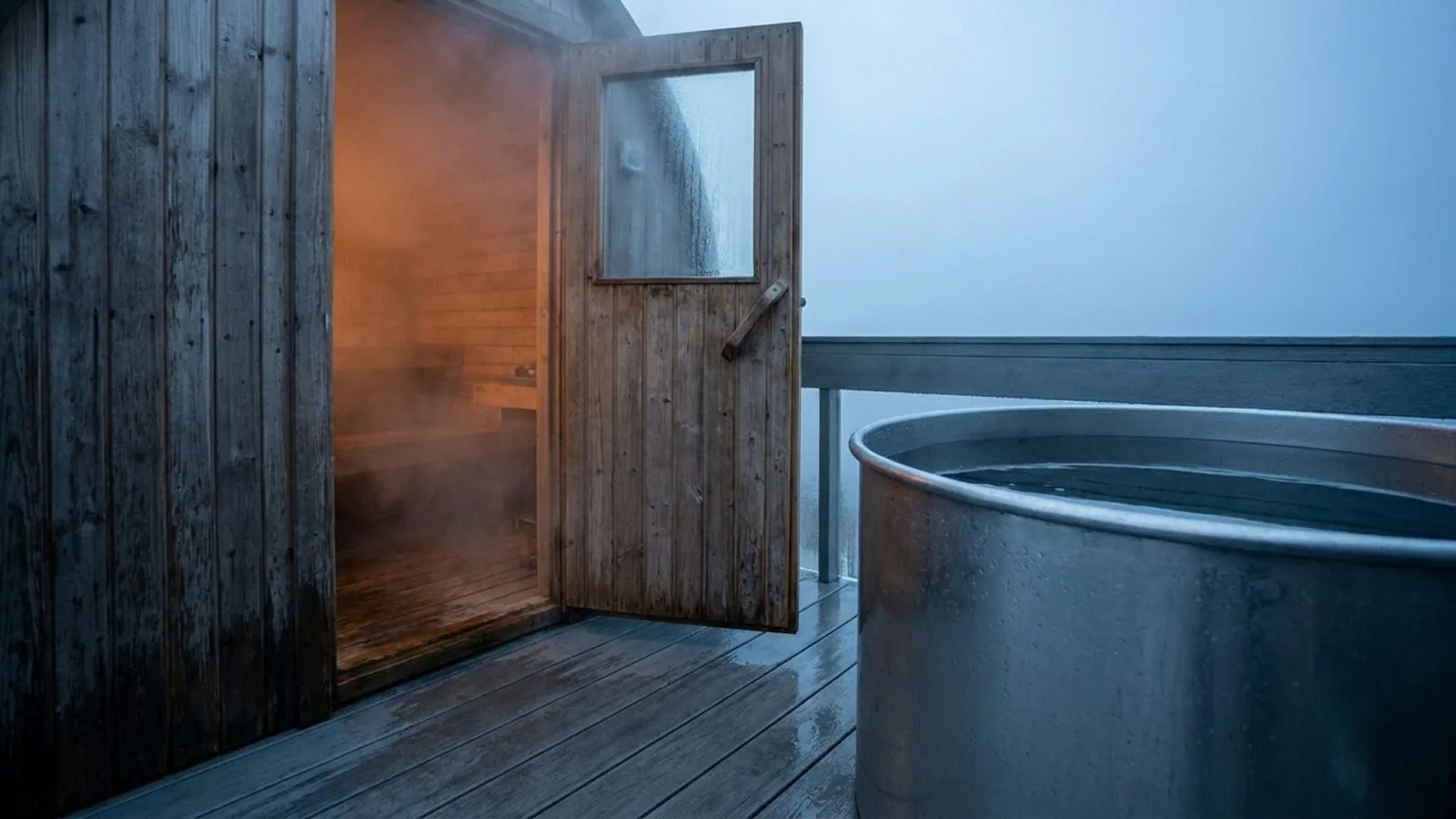
The Finns have run this experiment for a few hundred years: heat the body thoroughly, hit it with cold, repeat, and walk out feeling rebuilt. Contrast therapy is the strongest version of both practices, and it's also where people make sequencing mistakes that waste the session or push the cardiovascular load further than they meant to.
The Base Protocol
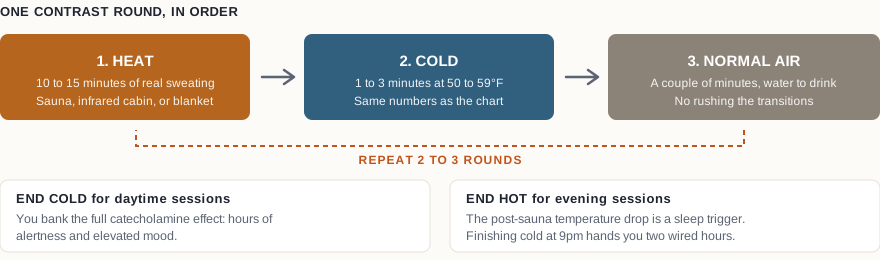
Rounds: 2 to 3.
Heat: 10 to 15 minutes of real sweating (traditional sauna, infrared cabin, or a sauna blanket).
Cold: 1 to 3 minutes in the protocol zone, 50 to 59°F. Same numbers as the chart.
Between: a couple of minutes of normal air, water to drink, no rushing the transitions.
Order: always heat before cold within a round. Never the reverse: plunging warms you up to sweat is a myth, and entering a sauna already shivering just extends both stresses.
End Hot or End Cold?
This is the real decision, and it depends on what the session is for.
- End cold for daytime sessions. You bank the full catecholamine effect: hours of alertness and elevated mood. This is the classic finish and the one consistent with the Søberg "end cold" principle from the main protocol.
- End hot (or just skip the last cold) for evening sessions. The post-sauna temperature drop is one of the better natural sleep triggers we know of, and finishing cold at 9pm hands you two wired hours instead. Heat last, then bed, is the sleep stack.
Why Bother Combining Them
Heat and cold pull the cardiovascular system in opposite directions: dilation against constriction, plasma volume shifts, repeated heart rate swings. That oscillation is a workout for the blood vessels themselves, and it's the plausible mechanism behind contrast therapy's long use for recovery and circulation. The honest caveat, same as everywhere on this site: the strongest evidence for sauna and for cold exists separately. The combination is ancient practice plus reasonable physiology, not a stack of RCTs. It also doubles the cardiovascular demand, so the safety page contraindications apply twice over, and hydration stops being optional: you can sweat a liter in a session.
Running Contrast at Home Without a $20,000 Build
You don't need a cedar room and a chilled tub. The budget contrast setup is a sauna blanket plus any cold tub from our budget setups page, and the whole thing fits in a closet between sessions.
For the heat half, our sister site covers that market the same way we cover this one, with current prices and the marketing called out: see the sauna blanket comparison at PortableSaunaBlanket.com, and their buying guide if you're deciding whether a blanket beats a tent-style portable sauna for your space.
One blanket-specific note for contrast work: getting out of a sauna blanket, drying off enough, and getting into water has more friction than walking cabin-to-tub. Most blanket users settle on 2 rounds rather than 3. The physiology doesn't mind.
If you want one concrete pick rather than a comparison to read: for contrast specifically, preheat time matters more than it does for standalone sauna use, because you are heating between cold rounds and every minute of waiting is a minute you spend talking yourself out of round two. The Hooga blanket preheats in about five minutes and runs $399, versus ten to fifteen minutes on the $699 HigherDOSE. It also carries a three-year warranty, which is the longest in that category. Hooga is the one brand on this site we have verified takes HSA and FSA money, which brings $399 to about $279 if you qualify; the honest math on that is short, and it does not apply to tubs or chillers.
The tradeoff to know: it is 71" x 35" and rated to about 6'2", so it pins your arms and taller users should look at the 71" x 71" blankets instead. Hooga also sells direct with HSA/FSA checkout through TrueMed, which can take another chunk off if you qualify.
A Sample Week With Both
- Mon / Thu: morning cold plunge only, 3 minutes (the standard protocol)
- Sat: full contrast session, 2 to 3 rounds, ending cold (daytime) or hot (evening)
- Lifting days: keep cold 4 to 6 hours from the gym, per the timing rules. Sauna after lifting is fine, and may even help growth; it's only the cold that argues with hypertrophy.
That lands around the 11-minute weekly cold dose with a heat practice layered on top, which is most of what the recovery industry sells, assembled from a blanket, a tub, and a hose.